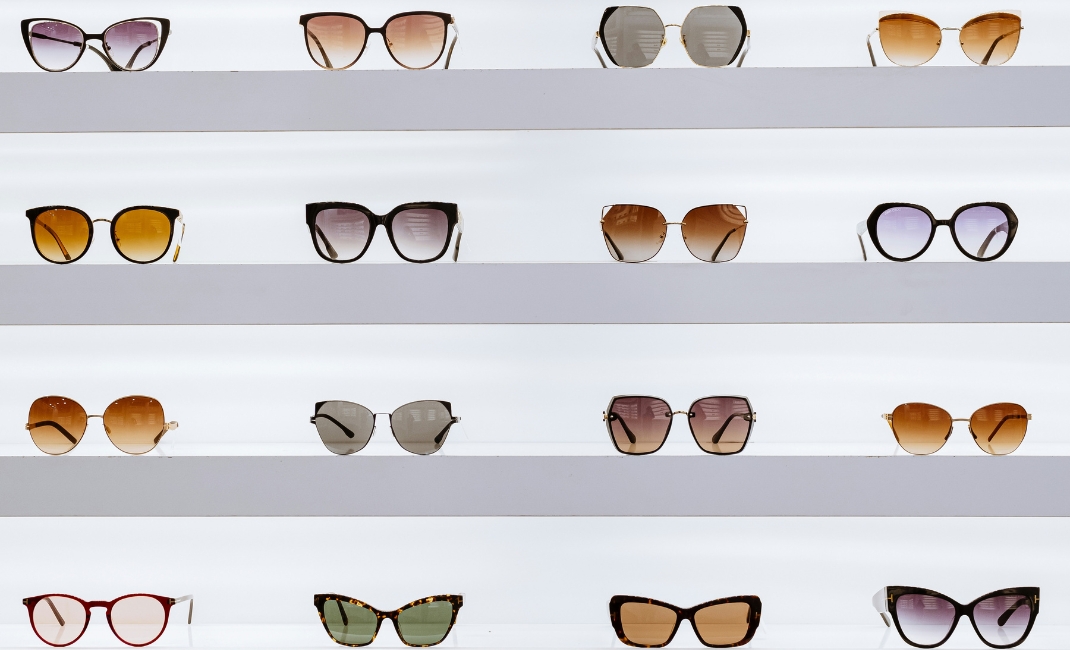


The brighter spring sun increases glare and highlights the importance of sunglasses in protecting the eyes. According to the survey “Use of Eyeglasses and Vision Examination in Finland 2025”, 53% of Finns own multiple pairs of sunglasses, with an average of about two pairs (2.02) in use. An optometrist`s expertise helps you choose sunglasses that protect your eyes and support good vision.
In the spring, the sun is often low on the horizon in Finland, which increases glare, especially while driving and spending time outdoors. According to the survey “Use of Eyeglasses Use and Vision Examination in Finland 2025”, sunglasses are part of everyday life for many Finns. 53% of survey respondents use more than one pair of sunglasses, with an average of 2.02 pairs in use.
“Sunglasses aren’t just a summer accessory. Properly selected lenses reduce glare and improve visual comfort, for example while driving and outdoors. In addition, they play an important preventive role in eye health”, says Mr. Panu Tast, CEO of the Finnish Association of Vision and Eyecare.
Most people buy sunglasses with a one-time payment
According to the survey, 92% of Finns purchased their most recent sunglasses with a one-time payment, while 8% acquired them through a monthly payment plan at an optician’s store.
On average, 116 euros were spent on sunglasses, but there are differences among consumers: 32% spent less than 50 euros on their most recent pair of sunglasses. Men over 60, those living in large towns, and those living in city centers spent the most money.
“The survey shows that there are significant differences among consumers when it comes to purchasing sunglasses. That is why it is important to offer options in different price ranges”, says Mr. Tast.
An optician’s store is the most common place to shop
According to the survey, 58% of Finns bought their most recent pair of sunglasses at a brick-and-mortar optician`s store in Finland.
Other places of purchase include department stores and bookstores (22%) as well as brick-and-mortar stores abroad (7%). The share of online shopping in sunglasses purchases remains fairly small (14%).
“Finns value quality, safety, and expertise. This explains why brick-and-mortar stores are holding their own as a place to buy sunglasses”, Tast notes.
Sunglasses are also part of vision correction
Sunglasses aren’t just protection for the eyes in bright sunlight; for many, they’re also part of daily vision correction. According to a study, 22% of sunglasses wearers use prescription sunglasses.
At an optician’s store, sunglasses can be individually fitted to the wearer, and lenses selected that meet both the intended use and any vision correction needs. When choosing sunglasses, both protection and comfort are emphasized. For example, lenses that adapt to changing light conditions can make it easier to see in situations where bright sunlight and cloud cover alternate.
“An optometrist`s job is to help find a solution that works as well as possible in the wearer’s daily life. When sunglasses are chosen correctly, they support vision and make being outdoors more enjoyable,” says Mr. Tast.
For additional information, please contact:
Panu Tast
CEO
The Finnish Association of Vision and Eyecare
Mobile: +358 40 542 2227, panu.tast@naery.fi
Taloustutkimus Oy (an independent full-service market research company operating in Finland and all Baltic countries) conducted the survey “Use of Eyeglasses and Vision Examination in Finland” on behalf of the Finnish Association of Vision and Eyecare.
The aim of the survey was to investigate, among other things, the use of eyeglasses, contact lenses, and sunglasses among Finns, as well as the situations in which they are used, purchasing habits, where they are purchased, and how much money is spent on eyewear. The survey was conducted using Taloustutkimus Oy’s online panel. The target group consisted of Finns aged 15 and older, excluding residents of the Åland Islands. A total of 1,119 people responded to the survey by the deadline. The results have been weighted to reflect the target group in terms of region, age, gender, and household size. Data collection took place between December 9 and December 13, 2025. The margin of error for the overall results is ±3.2 percentage points at a 95% confidence level.