


Strengthening preventive vision and eye care would improve the population’s functional capacity and significantly reduce costs to society. Research shows that even a slight decline in visual acuity reduces quality of life and places a heavy burden on the rest of the healthcare system and the national economy.
The World Health Organization’s (WHO) World Report on Vision emphasizes that a large proportion of vision problems are preventable or treatable when services are accessible and integrated into primary health care. The report also emphasizes the importance of early detection and directing resources where they have the greatest impact on the population.
Finland is committed to this goal, but in practice, eye care service chains remain fragmented, and the expertise of optometrists is not systematically utilized as part of the public service system.
Finnish research: costs arise before visual impairment
Joonas Taipale’s doctoral dissertation, published last year at the University of Tampere, shows that the societal burden of declining visual acuity arises largely before the condition meets the actual criteria for visual impairment.
In Finland, the direct costs of poor vision to the rest of the healthcare system amount to 1.9 billion euros annually — and the indirect costs resulting from reduced work capacity, decreased productivity, and early retirement amount to 1.2 billion euros. A key finding of the study is that the majority of the costs stem from a group of people who have not traditionally been identified as a risk group, because their vision has not deteriorated to the level defined as visual impairment.
At the same time, the study shows that only a small portion of the costs is directly related to eye care. The vast majority of costs arise elsewhere in the healthcare system and society, for example, as a result of increased falls, accidents, the need for care, and a decline in functional ability.
Furthermore, it has been shown that visual acuity impairment reduces quality of life at an early stage more than many other concurrent diseases.
Early detection is the most effective solution
Both the WHO report and Finnish research evidence lead to the same conclusion: the most effective and cost-efficient way to reduce the economic burden of vision problems is through early detection and prevention.
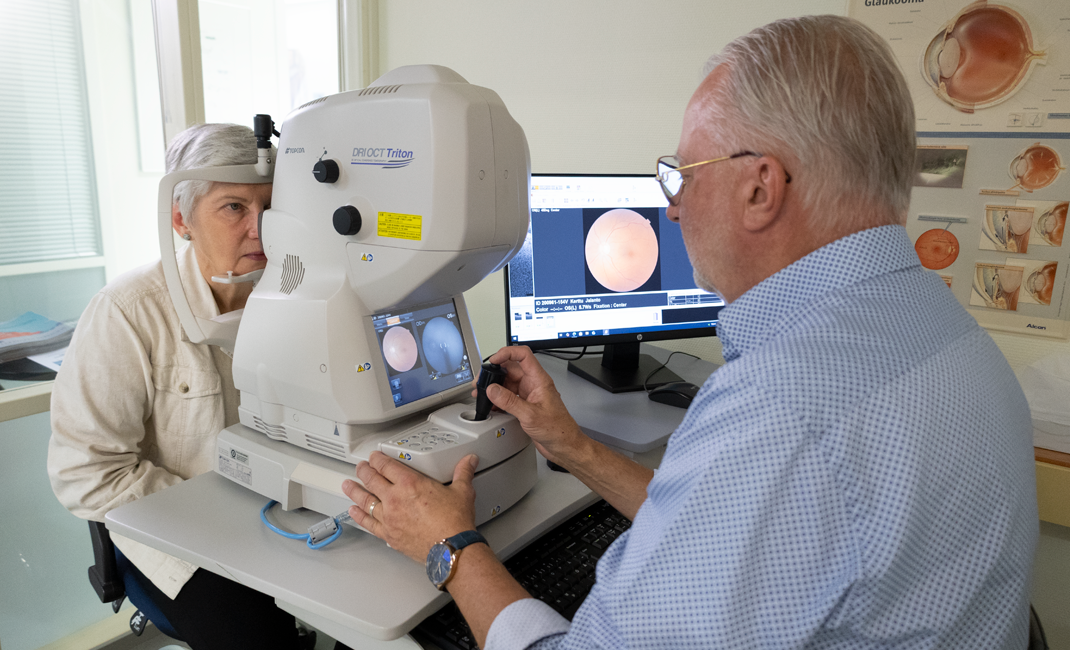
Regular eye exams enable the detection of eye diseases before symptoms worsen and support timely referral to treatment. Eye exams performed by optometrists play a key role in this, as they form the foundation of early eye health detection in practice.
Finland has an extensive network of optometry practices that offer accessible services throughout the country. This aligns well with the model recommended by the WHO, in which eye care is part of primary health care. However, this potential is not being realized in the current system, as a lack of integration undermines both the effectiveness and cost-effectiveness of services.
The system must be rebuilt around early detection
The Finnish Association of Vision and Eyecare proposes that optometry and ophthalmology services provided by optical stores be more closely integrated into the service provision of wellbeing services counties and that national care pathways for early detection and treatment be clearly defined.
Strengthening preventive vision care not only reduces healthcare costs but also improves the quality of life, functional capacity, and — especially for the elderly — the ability to cope independently in daily life.
“Taipale’s study clearly shows that the greatest costs arise even before the criteria for actual visual impairment are met. Therefore, investing in prevention and early detection is justified both from a humanitarian and an economic perspective,” states Panu Tast, CEO of The Finnish Association of Vision and Eyecare.
For additional information, please contact:
Panu Tast, CEO of the Finnish Association of Vision and Eyecare
Tel. +358 40 542 2227, panu.tast@naery.fi