

Instrumentarium conducted a three-day field study (N=245) to assess Finnish drivers’ vision for driving. The results showed that 15% of participants had either poor or only satisfactory driving vision. The greatest challenges were found among drivers aged over 60, with as many as 36% falling into these categories. “Poor driving vision makes it more difficult to detect details in traffic and slows reaction times,” summarizes Ritva Kahlos, optometrist at Instrumentarium.
As the dark season and slippery road conditions return, motorists’ visual performance is once again put to the test.
Instrumentarium’s optometrists assessed drivers’ vision at pop-up vision inspection stations located at shopping centers. The results were mixed: while many participants demonstrated excellent driving vision, nearly one in six struggled significantly in the test.
“For some people, the poor result came as a complete surprise. Others were aware of the issue but had not done anything about it,” says Kahlos, who conducted the vision screenings.
“Poor or only satisfactory driving vision can significantly impair the ability to notice details in traffic and slow down reaction times.”
Driving vision consists of several factors, including visual acuity, contrast sensitivity, and the extent of the visual field. Night vision and the eyes’ ability to adapt to changes in lighting are also important, particularly during the darker months of the year.
Drivers over 60 faced the most challenges
Age was clearly reflected in the results. While almost all young adults demonstrated excellent vision, more than one-third of participants aged over 60 had poor or only satisfactory driving vision.
“A large number of people of retirement age are driving with inadequate vision. Family members and friends should encourage them to address the issue and visit an optometrist.”
“Many passers-by told us they did not dare take the test because they already knew the result would be poor. If all passers-by had taken part, the proportion of people with poor or satisfactory vision might have been even higher.”
What are the signs of deteriorating driving vision?
According to Instrumentarium’s screening results, most people have a realistic understanding of their own visual abilities. However, vision often deteriorates gradually, making changes difficult to notice.
Kahlos highlights some of the clearest warning signs that vision may no longer be sufficient for safe driving.
“Do speed limit signs seem to flash by before you have time to read them? Long viewing distances, moving targets, and the grey autumn and winter conditions create a demanding vision test.”
Kahlos emphasizes that good driving vision involves more than simply seeing clearly at a distance.
“If you find yourself constantly straining to spot pedestrians and other details during dark evenings, reduced contrast sensitivity may be the cause.”
“Another common challenge is glare from oncoming headlights. If you are becoming more easily dazzled and recovering more slowly from glare, an early eye disease may be the reason.”
What can be done about deteriorating driving vision?
The best way to maintain good driving vision is to have your eyesight checked regularly by an optometrist and to ensure your glasses prescription is up to date.
“By the age of 40 at the latest, when the likelihood of presbyopia begins to increase, it is a good idea to have your vision checked. After that, examinations should ideally be carried out every one to two years.”
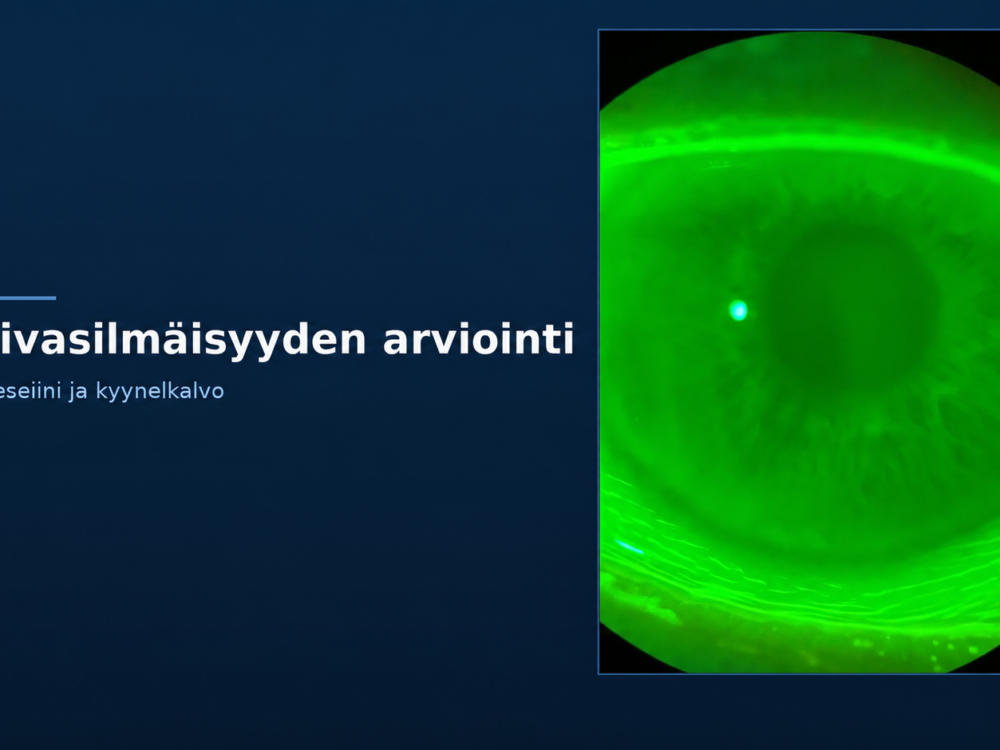
Eye examinations performed by optometrists may also reveal early signs of eye diseases that can affect driving vision. These include cataracts, age-related macular degeneration, and glaucoma. Based on the findings, patients can be referred to an ophthalmologist for further examination. Dry eye disease, which is common among Finns, may also impair driving vision.
About the Instrumentarium Driving Vision Screening
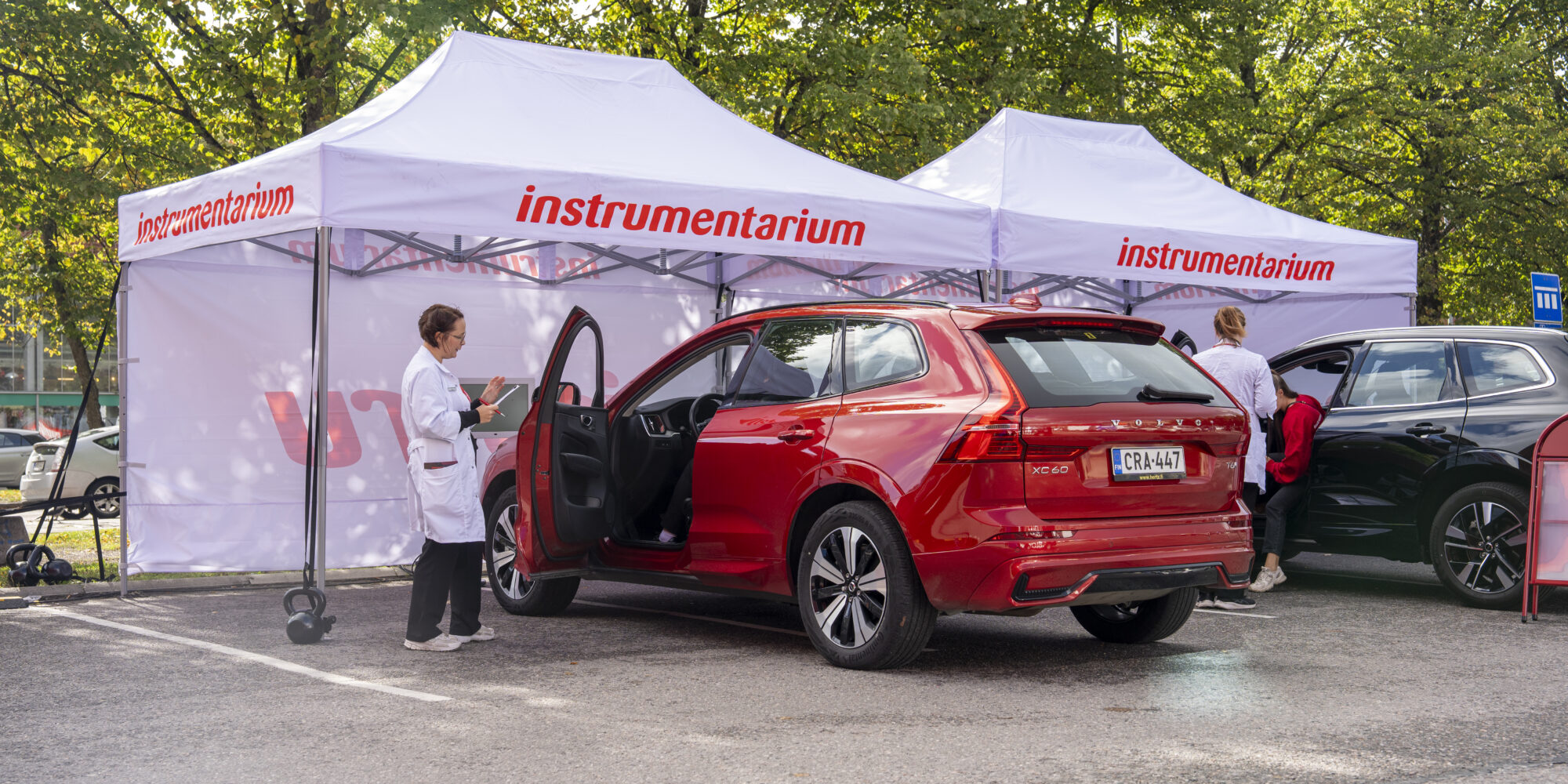
Instrumentarium’s driving vision screenings were conducted between 17 and 19 September at temporary testing stations built in the parking areas of the Easton shopping center in Helsinki, the Mylly shopping center in Raisio, and IdeaPark in Lempäälä.
A total of 245 people participated in the free tests over the three-day period. Participants were 52% female and 48% male, aged between 16 and 84 years, and represented different age groups relatively evenly. Of those tested, 99% held a driving licence.
During the test, participants sat in a car and looked at a screen positioned three metres in front of the vehicle. The screening measured both visual acuity and contrast sensitivity. The assessments were conducted by qualified optometrists.
Because the tests were carried out in field conditions, the results may not correspond exactly to those obtained in a clinical eye examination room. Assessment of driving vision also includes visual field testing, which was not part of this screening.
Key Findings
Overall Driving Vision Assessment
- Excellent: 66%
- Good: 19%
- Satisfactory: 9%
- Poor: 6%
Satisfactory or Poor Driving Vision by Age Group
- 16–29: 0 %
- 30–39: 3 %
- 40–49: 3 %
- 50–59: 9 %
- 60–69: 32 %
- 70–79: 42 %
- 80+: 33 %
Further Information
Ritva Kahlos
Optometrist
Instrumentarium
ritva.kahlos@instru.fi
040 647 4493
About Instrumentarium
Instrumentarium is a specialist optical retail chain owned by Instru Optiikka Oy. The company operates nearly 150 stores in Finland and 29 stores in Estonia. More than 200 optometrists and dispensing opticians serve customers across the chain. Many stores also offer ophthalmologist services, and Instrumentarium operates nine dedicated dry eye clinics. Instru Optiikka Oy is part of EssilorLuxottica.